
India’s Edible Oil Imports: How Much Does India Spend Every Year?
News Team – October 09, 2026
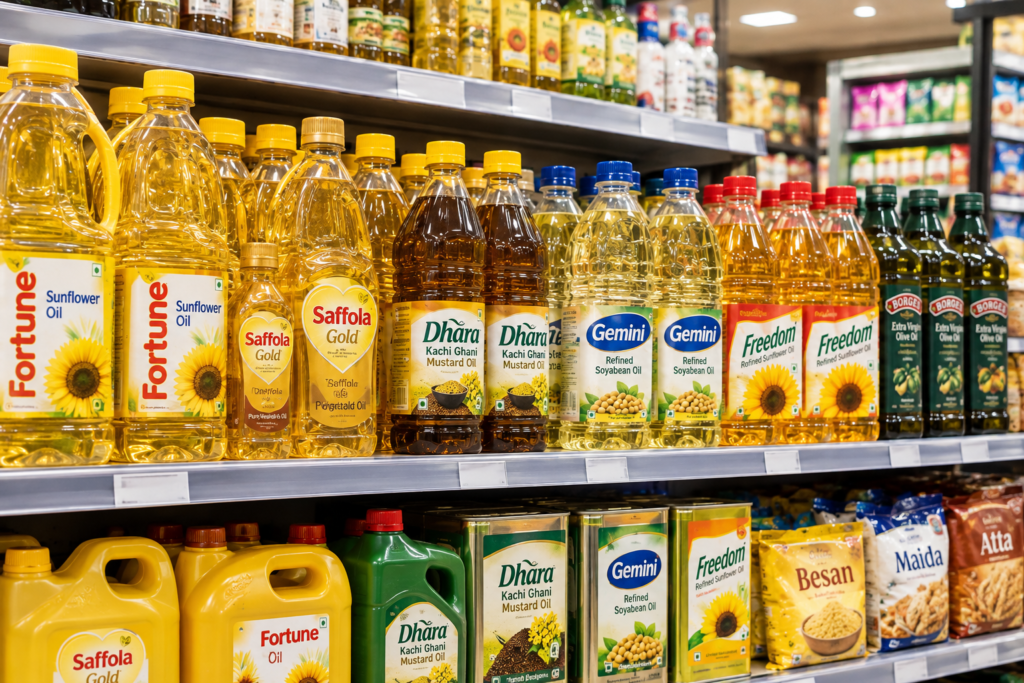
India is one of the largest consumers of edible oil, which is used every day in Indian households. Domestic production of edible oil is not enough, so India has to depend on imports. During the 2024–25 oil year, India spent approximately US$18.3 billion (Rs 1.61 lakh crore) on edible oil imports. This raises an important question: why does India continue to buy cooking oil from other countries, and what does this say about the Indian agriculture sector?
Prime Minister Narendra Modi has requested Indians to reduce cooking oil consumption by 10%. Cooking oil is easily available in local stores across India, but we should not forget that much of this oil depends on imports. This raises a big question: why does India import cooking oil from other countries even though it is an agricultural country? It also raises the question of why India is unable to produce enough edible oil for its own citizens.
According to reports, India spent approximately Rs 1.61 lakh crore, or US$18.3 billion, to import around 16 million tonnes of edible oil during the 2024–25 oil year. This makes India one of the world’s largest importers of edible oil. Such a large import bill puts pressure on India’s foreign exchange reserves.
India has vast agricultural land and millions of farmers, but domestic edible oil production is still not enough to meet demand. Many farmers prefer growing rice and wheat instead of oilseed crops.

According to Dr Himanshu Pathak, Director General of the International Crops Research Institute for the Semi-Arid Tropics (ICRISAT), farmers see oilseeds as risky crops because of irregular rainfall, pests, diseases and unstable market prices. This makes oilseeds less attractive to farmers compared with wheat and rice.
Dr Pathak says that rice and wheat are more stable crops and also receive strong policy support. Another challenge is the quality of the land and availability of water. Pulses and oilseeds are often grown on land with poor soil quality and limited water supply, which results in low production.
Dr Pathak says that when the real costs of water and electricity are included, growing oilseeds can be more profitable than growing rice because oilseeds require less water and electricity. However, wheat and rice continue to benefit from policy support, including crop insurance, guaranteed crop purchases and free electricity.
From Where Does India Get Edible Oil?
India imports palm oil from Indonesia and Malaysia, soybean oil from Argentina and Brazil, and sunflower oil from countries including Russia and Ukraine. The main suppliers can vary depending on international market conditions and the year.
How Do Global Prices Affect Indian Consumers?
Global edible oil prices can be high, and domestic edible oil prices can also increase, affecting Indian consumers. India has several festivals between September and November, when demand for cooking oil and food products can rise. To provide relief to Indian consumers ahead of the festive season, the Indian government reduced import duties on edible oils.
When import duties are reduced, import costs may fall, and the landed cost of imported oil may also decrease. However, lower import duties do not automatically mean that retail prices will fall by the same amount.
Retail prices also depend on several factors, including:
- International prices
- Freight costs
- Exchange rates
- Refining costs
- Profit margins
- Domestic supply
Government Reduces Basic Customs Duty on Edible Oils
Crude oils:
- Crude palm oil: 10% to 5%
- Crude soybean oil: 10% to 5%
- Crude sunflower oil: 10% to 0%
Refined oils:
- Refined palm oil: 32.5% to 27.5%
- Refined soybean oil: 32.5% to 27.5%
- Refined sunflower oil: 32.5% to 22.5%
Read this also:- On 3 April 2026, Jan Vishwas Bill Passed