
Elon Musk Gets FCC Approval for 1 Million Space Data Centre Satellites: What Is SpaceX Planning?
News Team – November 27, 2026
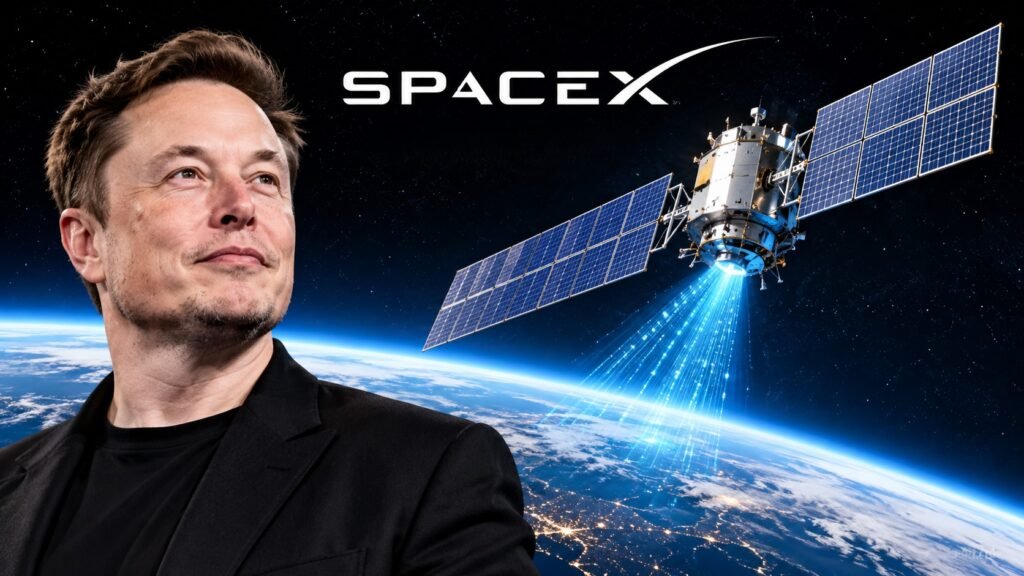
The United States Federal Communications Commission (FCC) has given approval to Elon Musk’s SpaceX to develop a mega network around 1 million satellites designed to operate as data centers in space. The name given to this project is Starmind, and the main purpose of this project is to support the growing demand for AI computing. On November 25, 2026, the FCC made the announcement.
The main purpose of sending these satellites into space is to process data in orbit and send it back to Earth. This concept is a new way to support AI services. However, the project is still in the development stage.
To run artificial intelligence systems, very large data centers are required to process information, along with powerful computers. When AI services expand, companies will face increasing demand for land, electricity and cooling systems to operate large facilities.
SpaceX believes that these challenges can be addressed by placing computer equipment in orbit. The company also says that when satellites operate in orbit, these machines can generate their own electricity from sunlight. SpaceX also says that this idea will offer a faster way to expand AI infrastructure to meet growing demand.
When Will SpaceX Launch the Million Satellites?
The FCC has set several deadlines for SpaceX to build the constellation.
- November 2033: SpaceX must deploy its first authorized satellite.
- November 2038: Half of the planned satellites must be deployed.
- November 2040: SpaceX must complete deployment of the full authorized network.
These milestones show that the project will be developed over many years rather than launched all at once.
How Could Elon Musk's Space Data Centres Support AI?
SpaceX has been given approval for this new approach to AI infrastructure. If it is successful, orbital data centers will provide additional computing capacity and reduce the need for land-based facilities. Experts have raised concerns that the project could create space debris, pose heat management challenges, and also impact astronomical observations.